
Introduction
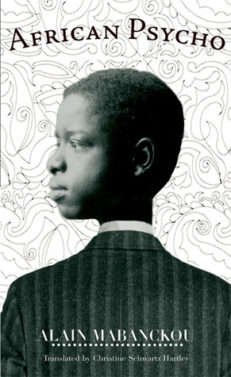
Alain Mabanckou’s novel African Psycho, published in its English translation in 2007, represents a landmark achievement in postcolonial African literature. Moving away from the conventional thematic preoccupations of anti-colonial resistance or cultural nationalism, Mabanckou delivers a dark, satirical, and deeply ironic subversion of the Western true-crime and serial-killer genres. Critics have noted that the text owes as much to Albert Camus’s existential masterpiece The Outsider as it does to Bret Easton Ellis’s American Psycho. Yet, rather than replicating the hyper-competent, slick, consumerist criminality of Patrick Bateman, Mabanckou introduces the reader to Grégoire Nakobomayo an extraordinarily insecure, structurally impotent, and comically incompetent aspiring serial killer who operates in the decaying margins of a postcolonial African slum.
Set on the Left Bank of a divided capital city, specifically within the sprawling, sewage-flooded, and vibrant neighborhood of “He-Who-Drinks-Water-Is-An-Idiot” (known natively in Bembé as Ba nwa mamb’ biwulu), the novel uses a first-person confessional narrative to explore the themes of urban alienation, historical erasure, institutional corruption, and the tragic parody of myth-making. The narrative is structured as a series of reflections, memories, and desperate rehearsals leading up to the scheduled murder of Grégoire’s live-in partner, Germaine, on December 29. Through Grégoire’s deeply unreliable voice, the novel contrasts the mundane realities of working-class survival with the spectacular, blood-drenched myths of his idol, the deceased legendary assassin Angoualima. The result is what reviewers have hailed as “Taxi Driver for Africa’s blank generation” a pulp fiction vision of Frantz Fanon’s The Wretched of the Earth that manages to be simultaneously terrifying, hilarious, and profoundly melancholic.
Mabanckou constructs a stark, allegorical geography that reflects the socio-economic polarization of the postcolonial state, divided by the sluggish Mayi River:
The Right Bank is situated on a raised ridge, close to the center of town, and is inhabited by the “very civilized” wealthy, white aid cadres, and government ministers. It is characterized by manicured greenery, fountains, apartment buildings with elevators, and streets like Three-Martyrs Street.
The Left Bank, conversely, is a low-lying, swampy “rat hole” where water puddles never dry up and skeletal dogs fornicate in the mud. The center of this Left Bank existence is the neighborhood He-Who-Drinks-Water-Is-An-Idiot. This colorful name is derived from a Bembé proverb, Ba nwa mamb’ biwulu, celebrating the neighborhood’s extreme concentration of informal bars, palm wine joints, and chronic alcoholism; in a place where drunkenness is a competitive sport, anyone who drinks pure water is literally deemed an idiot.
Cutting through this urban landscape is a fetid, garbage-strewn stream. In a supreme stroke of political irony, the city’s corrupt mayor baptized this sewage-filled canal the “Seine” during his election campaign. The mayor galvanized the illiterate crowds by claiming that having a body of water divide the capital into a Left Bank and a Right Bank was a prestigious geographical miracle that made their city identical to Paris. He won the election in the first round after promising that his personal friend, the mayor of Paris, would soon visit the neighborhood a promise that remains unfulfilled. Consequently, the Left Bank residents dump their refuse and human waste into the “Seine” in plastic bags, which slowly float downstream to rot near the dwellings of the poor.
Part I: My Idol and Great Master Angoualima
Sub-section 1: The Vow of December 29
Grégoire Nakobomayo opens his confession with a chilling, premeditated declaration: he has decided to murder his partner, Germaine, on December 29. He has spent weeks contemplating the deed, arguing that “killing someone requires both psychological and logistical preparedness”. While he has achieved the necessary cold-blooded state of mind, he deliberately leaves the choice of the weapon open, wanting to inject a “measure of improvisation” into his masterwork.
Grégoire mocks the police and the judiciary, noting that newspapers always credit bums and scoundrels with criminal genius when, in reality, their deeds are simple, logical actions that require no deep philosophical speculation. He desperately craves the same level of media coverage enjoyed by his idol, Angoualima. To pay tribute to this legendary killer, Grégoire regularly makes pilgrimages to the cemetery of The-Dead-Who-Are-Not-Allowed-To-Sleep, where he kneels before Angoualima’s grave to converse with the master’s ghost.
Sub-section 2: The Sniper of the Press
Grégoire laments the failure of his most recent criminal endeavor an assault on an off-duty nurse three months prior. To his immense frustration, the national press ignored the crime, relegating it to a tiny, four-line snippet in a neighborhood weekly called The Street Is Dying.
Grégoire’s pride is severely wounded because his actions are constantly credited to other local thugs. He recalls that Angoualima never suffered from such “radio silence”. When Angoualima committed suicide, he mailed an audio tape to the press where he repeated “I shit on society” for two hours, a phrase later turned into a massive musical hit by the banned local band, The Brothers The-Same-People-Always-Get-To-Eat-In-This-Shitty-Country.
Sub-section 3: The Genesis of a “Picked-Up Child”
Grégoire reflects on his childhood as a “picked-up child” the derogatory term used for babies abandoned by mothers in maternity wards to escape unwanted pregnancies, leaving the State to care for them. Grégoire harbor’s a deep, murderous rage toward his biological mother, imagining her running away in a loincloth soaked in amniotic fluid; he confesses that if he could, he would rip out her “heart of stone,” cook it in his furnace, and eat it with sweet potatoes.
He recounts his placement with a highly “cultivated” family of civil servants in the center of town. These adoptive parents subjected him to rigorous, suffocating experiments to civilize him. They forced him to wear hot, uncomfortable nylon clothes lined with silk in forty-degree heat, taught him how to pee quietly without making the porcelain ring, and shaved his rectangular head completely, making him the target of local children who chanted “Baldy, baldy!”.
His education in tolerance was coupled with strict catechism lessons under a scarred-face sister who used a long whip to beat the word of God into him. At the People’s School, the teacher sat Grégoire in the last row so that the other children’s paper balls would not land on his shaved scalp. Despite pretending to be slow to enjoy the teacher’s pity, Grégoire was a mathematical prodigy, solving complex divisions and fractions entirely in his head.
Sub-section 4: The Pointy Stick of Retaliation
The turning point of Grégoire’s youth occurs at age eleven. The host family’s spoiled, only son three years older and a frequent bed-wetter routinely used Grégoire as a guinea pig for violent games when his parents were away. One afternoon, the son dragged Grégoire into their shared bedroom, brandishing a stick and wearing a fake beard. He commanded: “Take off your pants. We’re going to do like daddies and mommies! You’re mommy and I’m daddy”.
Trapped and desperate, Grégoire outsmarted the boy by claiming that “daddies must always close their eyes” and turn off the lights before mommies undress. The spoiled son complied, turning his back and shutting his eyes to count to five. In the darkness, Grégoire grabbed the boy’s heavy stick which had a sharpened, pointy end and thrust it like a spear directly into the boy’s eye. Leaving the son screaming and wiping “abundant gooey liquid” from his ruptured socket, Grégoire fled the house forever, embedding himself in the Left Bank slums.
He survived by running errands for bums, sleeping under market tables, and joining gangs of pariah youth who respected him as a leader because of the legendary story of his brother’s pierced eye. During this time, he educated himself by stealing comic books (Blek le Roc, Zorro) and novels (La Brute by Guy des Cars) from the sidewalk bookstore near the Duo movie theater. When caught stealing Pléiade volumes at Saint-Jean-de-Bosco church, the eccentric Father Mathieu merely gave him the books and a pocket Bible.
Sub-section 5: The Mercedes and the Hammer
Now an adult, Grégoire recounts his first solo, calculated crime. His target was Fernandes Quiroga, a wealthy, light-skinned notary and real estate agent who flaunted his success by driving a brand-new Mercedes with smoked windows. Grégoire harbored three intense grievances against Quiroga:
- His offensive wealth in a city rotting in indigence.
- Quiroga’s beautiful teenage mistress, whom Grégoire stalked and masturbated to multiple times a day in the sheet-iron toilets of his garage.
- The belief that Quiroga kept a massive safe filled with cash in his office.
Grégoire took a bus to the center of town, concealing a heavy hammer in his beige overcoat. He gained entry to Quiroga’s office by fabricating a story about wanting to sell two valuable plots of land he had inherited from his deceased grandmother (decujus). As the notary turned his back to reach for an appointment book, Grégoire pulled the hammer and struck him with full force on the nape of his neck, describing the impact as feeling like “breaking a dinosaur egg”.
Quiroga collapsed, unconscious and bleeding profusely. Grégoire frantically ransacked the office but found no safe behind the paintings, only a firearm that terrified him. He fled down the stairs, narrowly avoiding Quiroga’s young mistress as she arrived in a taxi. Although Quiroga survived and did not report the attack to protect his reputation, the media ultimately attributed the spectacular assault to Angoualima, leaving Grégoire frustrated and unacknowledged.
Sub-section 6: The Theater of Justice
Grégoire discusses his obsession with attending criminal trials at the city’s large, decaying courthouse. He describes these visits as “going to the movies,” standing in line to watch “actors” perform real-life dramas of blood and destiny.
He focuses on the trial of Ted Louko, a poor mechanic who murdered his wife with an electrical screwdriver after slipping a sleeping pill into her beer out of jealousy. Grégoire is transfixed by the moralizing, theatrical performance of the public prosecutor, who successfully requests the death penalty by painting Louko as a “stain on society” who has reverted to “the paleolithic age”. Grégoire identifies with the accused, weeping not out of pity for Louko, but because he imagines himself sitting at the defendant’s table.
Sub-section 7: Squeezing the Criminologists
Grégoire returns to his obsession with defending Angoualima’s honor. He recalls listening to “Listeners Speak Out,” a highly popular radio program featuring a arrogant criminology professor from the capital’s university. The professor uses Cesare Lombroso’s L’Uomo Delinquente (The Criminal Man) and the “Italian school of criminology” to analyze Angoualima, comparing him to minor European murderers like Baptiste Laborie (who brought his brother’s severed head to a hospital) and Sadilleck (the train butcher).
Furious at this academic desecration of his idol, Grégoire runs to a public phone booth, physically removes an old man with a cane, and dials into the live radio station. Wrapping his shirt around the receiver to disguise his voice, Grégoire bellows: “I am Angoualima and you can go fuck yourself”.
When the panicked star journalist accuses him of being an impostor, Grégoire threatens to decapitate him and leave his “warthog head” with a Cuban cigar on his doorstep. Terrified, the journalist and his staff deliver a desperate, exhaustive public apology on air. Although Grégoire feels a triumphant surge of power, the entire stunt is credited by the media to the real, living Angoualima, cementing Grégoire’s role as an invisible ghostwriter of another man’s legend.
Part II: The Girl in White
Sub-section 1: The Impotence of the Left Bank
Grégoire reconstructs the exact details of his comically disastrous assault on the “girl in white” three months prior. Leaving the local bar “Take And Drink, This Is The Cup of My Blood” after consuming multiple glasses of gin, Grégoire wandered onto One-Hundred-Francs-Only Street. He explains that the street’s name was changed from “At-Least-Six-Hundred-Francs” after an influx of foreign prostitutes from the “country over there” arrived in canoes, causing a collapse in the price of paid sexual transactions and driving the local “Amazons” to the center of town.
Through the darkness, Grégoire spotted a tall silhouette in white and assumed she was a new prostitute. He approached her, lying that he was an unlicensed “gypsy” cab driver. Despite her initial hostility and complaints that he “stank of alcohol,” she agreed to follow him into the dark alleys.
When she realized they were walking in circles and called him an “idiot” and a “drunk,” insulting his brick-shaped head, Grégoire lost his temper. When she tried to walk away, he grabbed her hand; she swung her fake crocodile-skin purse into his face, prompting him to tackle her like a defender in a football match. He grabbed a heavy piece of dead wood and struck her on the nape of her neck, knocking her unconscious.
After stripping her naked, Grégoire was seized by sudden, humiliating erectile dysfunction. Despite frantically touching himself and attempting to force his “premie’s thing” into her mouth to let the warmth of her lips arouse him, his body refused to cooperate. Just as his “disobedient thing” began to stir, the blinding headlights of an approaching car forced him to pull up his overalls and flee in a panic over barbed wire and through lantana hedges, leaving his victim alive.
Sub-section 2: The Graveyard Scolding
The morning after his humiliating failure, Grégoire drove his client’s dilapidated Peugeot 404 a car whose brakes operated as accelerators and vice versa to the cemetery of The-Dead-Who-Are-Not-Allowed-To-Sleep.
He walked to the isolated dirt mound of Angoualima’s grave to beg for forgiveness. The Great Master’s ghost appeared in the fog, looking “Imperial, Divine, Colossal” with his twelve fingers, harelip, and ram’s goatee.
The ghost ruthlessly criticized Grégoire, calling him “the least gifted” and a “pathetic character” who has brought disgrace to the criminal profession. When Grégoire proposed flamboyant criminal nicknames like “Greg the Rattler” or “Greg Storm,” the ghost roared with laughter, stating that “Rectangular Head” would fit him like a glove. Angoualima warned him never to invoke his name again until he had real, successful blood on his hands, threatening to resuscitate himself and slit Grégoire’s throat with a Gillette blade if he failed.
Part III: Killing Germaine
Sub-section 1: The Rehearsal of the Cauldron
Grégoire explains his philosophical aversion to knives. He views them as cheap, common tools used by primitive men and Bembé tribesmen, who are famous for pulling penknives out of their pockets at the slightest provocation (such as the legendary soccer referee Kimpolo).
He bought a expensive, broad-bladed sacrificial knife at the Great Market but hid it in his workshop because Germaine found the grease-filled shed “sinister and untidy”. Grégoire is deeply offended by her criticism of his workspace, which he built with his own hands. He reveals his true motive for taking Germaine in: he wanted to “fatten her up like a chicken to be eaten during a holiday dinner”.
He stages a elaborate simulation in his empty workshop, heating the sacrificial knife in his furnace until it glows red, then dipping it in water to hear it “roar in a blinding cloud of steam,” imagining how the hot metal will slide through Germaine’s flesh. However, he rejects this plan because dumping a mutilated body in the “Seine” is too “banal” and “ordinary,” and he fears the police will relegate it to a simple “rape by a psychopath,” earning him the humiliating nickname “Chicken Little”.
Sub-section 2: The Cowardice of the Trigger
Grégoire analyzes and rejects firearms. He argues that guns are coward’s weapons, designed by “chickens” who fear face-to-face confrontation. He recalls a conversation with a client a former policeman who explained that a bullet victim never hears the detonation that kills them. This bothers Grégoire; he wants Germaine to experience the full, terrifying consciousness of her death.
He describes a visit to the city’s sole gunsmith, managed by a white man with a nose “red as a hot pepper”. To blend in, Grégoire spun outrageous lies about being a legendary hunter who had killed building-sized elephants, mountain-sized lions, and gorillas twice as impressive as King Kong. He left the shop disgusted by the modern, overdecorated Winchesters and Berettas, confirming that Angoualima also loathed firearms as tools of ultimate cowardice.
Sub-section 3: The Domestic Trap
Grégoire shifts his focus back to the domestic life he has shared with Germaine for the past month. He met her at the Left Bank’s Open Air restaurant while she was having a loud argument with the proprietress over a small notebook. Grégoire offered her a Camel cigarette, and she sat at his table, confessing that her roommates had stolen all her belongings and savings.
Grégoire took her to his house, hiding his Angoualima photos under the mattress. Over the following weeks, Germaine slowly integrated herself into his home, leaving her toiletries such as Dop With Eggs shampoo and Diamond Enamel toothpaste in his bathroom.
Eventually, she arrived with a large suitcase, announcing she was moving in and would stop whoring to dedicate herself to him. Grégoire convinced her to continue her sex work part-time, arguing that prostitutes were as respectable as ambulance drivers or notaries. He spent four weeks “fattening her up” with good food and Heineken, smiling as he imagined her as a cold corpse at his feet. Now, the target date has arrived: it is December 29.
Part IV: The Murder
Sub-section 1: The Macrocephalic Scalp
On the morning of December 29, Grégoire is overwhelmed by intense, somatic anxiety. He is unable to work, and his hands are so swollen that they are in pain; suddenly, bright, heavy red blood begins to pour from his nostrils. Terrified by the sight of his own blood, he washes his face in the shower and stares at his bald scalp in the mirror.
He notes that his macrocephalic, rectangular skull is bisected by a prominent vein that only appears when he is overexcited. He reflects on the fact that he has no birth certificate or ID, having torn them up as a child. He finds comfort in his ugliness, noting that like Angoualima, he has no official age or identity he is a ghost who “shits on society”.
Sub-section 2: The Seduction of the Arsenal
At 4:00 p.m., while Germaine is away at her daytime shift at the restaurant, Grégoire searches her large suitcase. He discovers a staggering, bizarre arsenal of tools designed for her nocturnal sex work.
This discovery forces Grégoire to realize that her prostitution is a serious, highly calculated profession.
At 9:00 p.m., he scours a heavy aluminum cauldron in his workshop, which he plans to use to boil her body. He takes a heavy hammer off the wall, cleans it, and hides it under the sofa-bed at the exact spot where he usually sits, leaving the handle sticking out so he can easily grab it while caressing her head.
By midnight, Germaine has still not returned. Grégoire paces the plot in agony, checking his watch as lightning flashes in the sky. He sits on the sofa-bed, but his vision blurs; he begins to count the stars through the roof, slipping into a hallucinatory, dream-like state. He feels himself floating “light as a feather” into an immense, swirling abyss, gently lulled to sleep by Angoualima’s twelve-fingered hands.
Sub-section 3: The Headline of the Right Bank
Grégoire wakes up with a start at 5:00 a.m. to the loud static of the television. He realizes with horror that he has slept through the entire night with the front door unlocked.
He rushes to the bedroom and finds the bed perfectly made and empty; Germaine never came home. Germaine’s suitcase has not been moved, his hammer is still untouched under the sofa, and his candles have melted into the tablecloth.
Suddenly, the TV news anchor announces a horrific crime: a foreign streetwalker has been brutally murdered around midnight in Three-Martyrs Street on the Right Bank. Grégoire steps closer, his nose inches from the screen, and stares in absolute shock.
The victim is Germaine.
The television broadcasts an interview with an old woman witness who repeatedly chants “I’m telling you!”. She recounts that she saw a man stab Germaine repeatedly.
Instead of fleeing, the murderer showed her his bloody knife, peed on Germaine’s corpse, and shouted “I shit on society” until the police arrived to arrest him. The police chief and the mayor appear on screen, congratulating their forces for wrapping up the investigation instantly. Grégoire is thrown into a state of panic, wondering if his own mind was possessed by a spirit that drove him to commit the murder in his sleep without his knowledge.
Sub-section 4: The Final Rain
Determined to claim the murder as his own in the eyes of his idol, Grégoire starts his workshop’s old Peugeot 404 and drives at breakneck speed to the cemetery of The-Dead-Who-Are-Not-Allowed-To-Sleep.
He runs through the acacia lanes to Angoualima’s grave. Before he can even begin his prayer, the Great Master’s ghost materializes, looking pale and blending with the thick fog. Grégoire boasts: “It’s done, Great Master… I killed Germaine”.
The ghost angrily cuts him off, calling him a liar, a cretin, and an imbecile. The ghost reveals that while Grégoire was pacing his room like a coward, the real murderer had visited Angoualima’s grave at 4:00 p.m. to pledge his deed, pushing a handful of graveyard dirt into his overcoat pocket as a sign of absolute, cold-blooded determination.
The ghost reveals the devastating truth: the killer is the fake railroad worker. Germaine was not a naive, helpless victim; she was a ruthless “fighter” who ran a highly organized prostitution network in complicity with the Open Air restaurant’s proprietress. The fake railroad worker was her business partner from the “country over there”. He did not wet his bed or demand that she bark like a dog; those were lies Germaine spun to hide her network’s operations. The partner discovered that Germaine was planning to run away to the Left Bank with their accumulated earnings, tracked her down, and killed her to retrieve the money.
The ghost delivers his final, devastating sentence to Grégoire:
“You will never be a criminal… Leave this job to others and keep on banging on the bodies of this city’s damaged cars like a shithead, that’s all you’re good for.”
The ghost warns Grégoire never to return, stating that he is ascending to Heaven for his final judgment and will “keep on shitting on society” from above.
Angoualima’s shadow vanishes forever. A massive, violent storm erupts over the cemetery, and Grégoire is left entirely alone, sitting on the wet mud of the grave, weeping bitterly in the pouring rain.
Analytical Themes
I. Existential Impotence and Somatocentrism
The core tragedy of Grégoire Nakobomayo is his profound existential and physical impotence. While he attempts to construct a narrative of sovereign, terrifying violence, his body consistently betrays him.
This is illustrated by his macrocephalic, shaved rectangular head a physical marker that invites constant public ridicule (“Baldy!”) and segregates him to the back row of society.
His physical somatic anomalies are not signs of power like Angoualima’s twelve fingers; instead, they are markers of biological alienation. His impotence culminates in his comically disastrous attack on the nurse, where his sexual organ contracts into a “premie’s thing,” forcing him to realize his absolute failure to step into the boots of his hyper-masculine idol.
II. The Postcolonial Slum as an Excremental Space
Mabanckou utilizes an “excremental poetics” to describe the postcolonial urban landscape. The Left Bank is literally defined by stagnancy, decay, and feces wrapped in plastic bags floating down the “Seine”.
This physical pollution mirrors the moral and political corruption of the state:
- The mayor uses the renaming of the sewage-filled Mayi River to manipulate the population.
- The police prefect runs a performative, incompetent manhunt (the ICA) that fails to recognize the target even when he lines up in their lobby.
- The state-run host families treat “picked-up children” like stray dogs, trying to impose artificial, Western codes of hygiene and respectability on bodies designed for raw survival.
III. The Parody of the True-Crime Genre
The novel operates as a brilliant, self-conscious parody of Western true-crime literature. Grégoire is a highly literate narrator who discusses Proust, Camus, and Guy des Cars, yet his criminal “theory” is derived entirely from stolen comic books and sensationalist television interviews.
Mabanckou parodies the “psychopathic genius” trope popularized by characters like Hannibal Lecter or Patrick Bateman. Grégoire’s extensive, obsessive simulations (heating the knife to 1000 degrees, planning a theatrical candlelit execution) are rendered completely useless by the messy, chaotic, and unglamorous reality of street-level survival.
His planned victim is snatched away not by a brilliant detective, but by a mundane business dispute over cash in a clandestine prostitution ring, reducing Grégoire’s grand existential tragedy to an irrelevant domestic footnote.
Characters
Grégoire Nakobomayo (The Impotent Pretender)
Grégoire is the novel’s protagonist and narrator. His last name, Nakobomayo (which carries the linguistic echo of “I will kill you” in Lingala), stands in stark, ironic contrast to his absolute inability to execute a successful, premeditated violent crime. Described physically as possessing skeletal legs, a “rectangular head” shaped like an empty brick, small eyes, a prominent brow, and skin blackened by motor grease, Grégoire is plagued by a profound sense of aesthetic and social inferiority. He is a “picked-up child”, abandoned at birth in a maternity ward and shuttled through state-run host families before seeking refuge in the slums to work as a sheet-iron and auto-body mechanic. Grégoire is obsessed with acquiring “psychological and logistical preparedness” for murder, yet his primary crime is not physical violence but a desperate, pathetic attempt to escape his social invisibility through the plagiarism of infamy. His narrative reveals a “disposition that bears some resemblance to mayonnaise gone bad” alternating between a highly polished, intellectual vocabulary learned from stolen books and sudden descents into shocking vulgarity.
Angoualima (The Twelve-Fingered Myth)
The late, legendary “King of Crime” and “Great Master,” Angoualima represents the ultimate figure of postcolonial transgression and sovereign violence. Born with twelve fully functional fingers (six on each hand) and a harelip, his physical anomalies are romanticized by the public as signs of supernatural criminal genius. Angoualima’s criminal career spanned both banks of the Mayi River; he utilized magical formulas (mpini) to make himself invisible, burned mystical herbs to put his victims to sleep, and raped the wives of wealthy elites with what journalists dubbed his “fifth limb”. He signed his crimes by carving his name on precinct walls and mailing the severed heads of his victims with Cuban cigars screwed into their open mouths to the national press. Rather than being caught by the police, Angoualima committed suicide, leaving behind an audio tape repeating “I shit on society” for 120 minutes. His grave in the cemetery of The-Dead-Who-Are-Not-Allowed-To-Sleep serves as a shrine where his demanding, ruthless ghost routinely appears to scold, insult, and humiliate Grégoire for his amateurism.
Germaine (The “Fallen” Strategic Fighter)
Germaine is Grégoire’s live-in partner, whom he meets at the Left Bank’s Open Air restaurant. To Grégoire, Germaine is merely a “whore pulled off the street” whom he can domesticate and “fatten up like a chicken to be eaten during a holiday dinner”. She is characterized as chatty, romantic, and demanding of Western-style courtship rituals (candles, roses, and breakfast in bed), habits she supposedly picked up from her wealthy white clients on the Right Bank. Germaine claims to have lost all her belongings and savings to jealous roommates after crossing the Mayi River in a canoe from the “country over there”. While Grégoire views her as a passive, naive victim destined for his cauldron, the novel’s climax reveals that Germaine was actually a highly active, hardened “fighter” who secretly managed a lucrative, illicit prostitution network in complicity with the restaurant’s proprietress.
Supporting Characters
- Fernandes Quiroga: A wealthy, mixed-race notary and real estate agent who operates out of a luxurious office near the Kassaï roundabout in the center of town. Quiroga is the object of Grégoire’s intense envy due to his success, his brand-new Mercedes, and his relationship with the most beautiful girl in the Left Bank.
- Father Mathieu: A bald, scratchy-voiced priest at the Saint-Jean-de-Bosco church who repeatedly catches a teenage Grégoire stealing prestigious Pléiade collection books. Instead of calling the police, Father Mathieu forces Grégoire to confess, lectures him, and hands him the stolen books for free alongside a pocket Bible.
- Ted Louko: A poor workman whose trial Grégoire attends. Louko murdered his wife with an electrical screwdriver at five in the morning after slipping a sleeping pill into her beer out of jealousy. His trial serves as Grégoire’s “laboratory of human feelings” and introduces the fearsome public prosecutor whose moralizing rhetoric Grégoire deeply despises.
- The “Well Then? Trust Me!” Duo: A television journalist characterized by a strong northern accent and an anonymous interviewee who claims on black-and-white television to have met Angoualima. Their sensationalist, highly absurd dialogue remains a legendary moment in the nation’s media history, ending tragically when both of their heads are found on the wild coast with Cuban cigars in their mouths.
- The Fake Railroad Worker: A pot-bellied, sweat-soaked client of Germaine’s who allegedly demands that she “bark like an Alsatian or a bulldog” while he is on top of her. Ultimately revealed by Angoualima’s ghost to be a ruthless thug from the “country over there,” he is the man who actually murders Germaine to steal her prostitution network’s accumulated capital.
Conclusion: The Forever Rainy Graveyard
Ultimately, African Psycho is not a novel about a serial killer, but a tragicomic exploration of insignificance and historical erasure. Grégoire’s final confrontation with Angoualima’s ghost strips him of his last illusion: the belief that his life possesses a grand, mythic destiny.
By revealing that Germaine was the true criminal operator and that Grégoire was merely a naive, blind host to her network, Mabanckou delivers a devastating critique of the “blank generation”. Grégoire is sentenced not to the scaffold or the firing squad, but to the ultimate postcolonial punishment: to return to his dark, grease-stained shed, picking up his mallet to endlessly bang on the beat-up scrap iron of other people’s cars, forgotten by history, weeping in the cold, indifferent rain.